

Category: Articles
Tips on freefall safety, parachute flight, rigging, packing, and much more from the instructors, pilots, and riggers at Skydive Spaceland.
-
Right-Now Rigging
Oh no! You want to jump this weekend, but your reserve is out of date! Can this tragedy be averted so you can get some quality sky time? The answer is: Maybe! Our full-time rigging loft may very well be able to accommodate your right-now repack request, depending on their current workload. If you need your repack completed in less than a week, please give our riggers a call at…
-
Special Dives: Low/High Pulls, Toy Dives, Pond Swooping
Low/High Pulls High openings and low passes must take into account the number of airplanes flying, other skydiving activities, and canopy descent rate. We cannot always accommodate low passes or high openings. We cannot guarantee that low-pass jumpers will land alone unless only one plane is flying. Ensure that the aircraft is configured for your exit regardless of your exit altitude. Licensed jumpers wishing to open above 5,500 feet (such…
-
Landing/Canopy Safety
Canopy Safety Wind indicators: Landing direction arrow, flags, wind sock. The landing direction arrow is an air-traffic control device that sets the landing direction on the north side of the runway. Know the landing direction before takeoff, and check the landing direction indicator (LDI) north of the runway after you open and check canopy in case winds have changed. Follow the landing direction indicator when landing north of the runway. No…
-
Aircraft/Loading Area Safety and Policies
Winds Aloft This information is posted daily on the board near the aircraft mockups. Also check out our weather page… Loading Area We use loading area 1 (north of the hangar) on cold starts/after fueling, and loading area 2 (northwest corner of hangar) on hot turns. Please be in the loading area on the 5-minute call. You must be fully geared up, ready to jump, before entering the loading area.…
-
Wingsuit Dive Policies
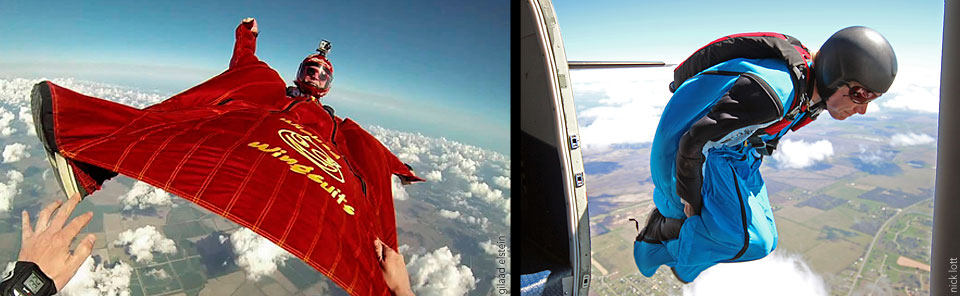
Wingsuit jumps carry many of the same risks as tracking/angle flying because of the horizontal movement component. They can also pose a risk to later-dropping aircraft because of the extremely slow fall rate. They can pose challenges when dealing with malfunctions as well, because of the limited mobility many suits allow the jumper before wings are released. These dives have a higher chance of landing off the DZ. Also, since…
-

New on New
Are you a new skydiver with a shiny new A license? Or maybe you’re a skydiving student already thinking about the fun things you’ll do after you graduate? Congratulations on becoming a part of the global skydiving community! We’re glad you’re here. 🙂 Now let’s talk a little about the skydives you’ll do once you graduate. There are so many choices! One thing we see frequently, perhaps because we are…
-
Skydive Spaceland Camera Policy
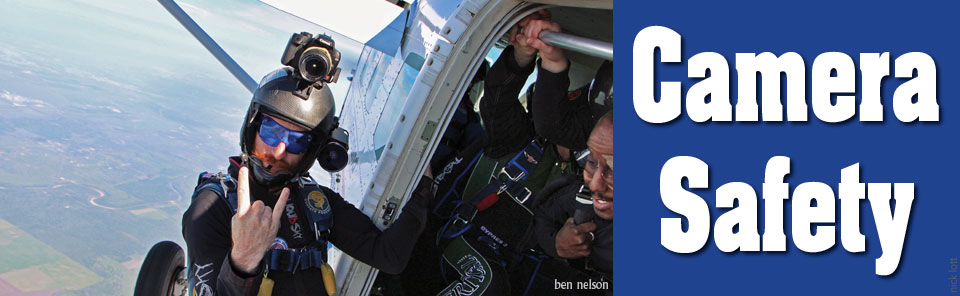
Forrest Gump might have said that skydiving and cameras go together like peas and carrots. It’s an awesome thing to capture what’s arguably the world’s most fun aerial activity with a nice tiny, high-quality camera such as a GoPro. It won’t get in the way, right? You won’t even know it’s there! To go back to our peas-and-carrots analogy, it doesn’t quite fit the skydiving scene in the sense that…
-
Avoiding Turbulence
It is bumpy up there! Turbulence is the Rodney Dangerfield of skydiving…. It doesn’t get respect. Turbulence is a challenge for jumpers for at least two reasons: It is invisible and unpredictable. Because turbulence is invisible, we must actively anticipate where it may be. Most new jumpers (and a lot of more experienced ones) vastly underestimate the danger zone for mechanical turbulence around obstacles. We can expect turbulence in front of,…
-
Hop and Pop Skydiving Smarts
If you’re a people watcher, observing skydivers preparing for hop and pop skydives (low-altitude exits) is a lot of fun. You see everything from cool-cat, ho-hum, highly experienced swoopers practicing their craft to jumpy first-timers doing their first exits below full altitude, hoping with all their hearts to be stable enough to deploy within the 5 seconds required to graduate from student status. With all that observation, you tend to…
-
Does Your Canopy Turn When You Land?
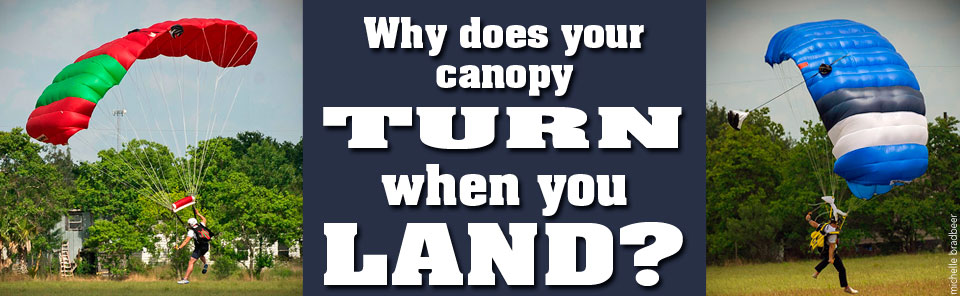
Does your canopy turn when you land? The most common cause of this is when the pilot looks to one side instead of straight ahead, creating a chain effect. We tend to go where we look. As you enter your flare, if you look down and in either direction, your body will want to go that direction. Try standing in front of a mirror and hold your hands at chest level a few…
-
Long Hair? Avoid This Skydiving Malfunction
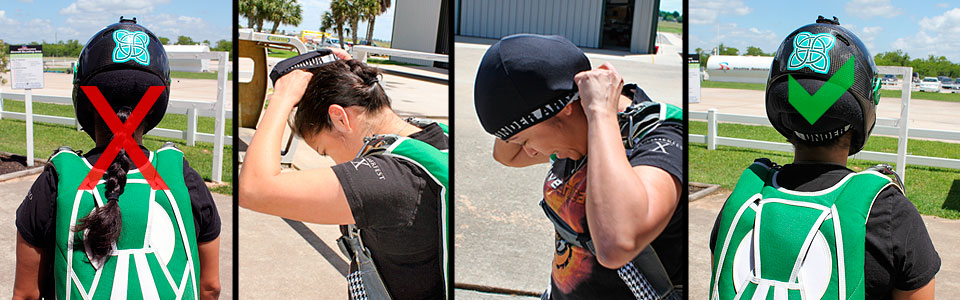
Ah, the feel of freefall on your face, your hair whipping in the wind… wait a minute! If you have long hair (past your shoulders), hair whipping around in freefall is actually a bad thing. Aside from the Gordian knot that often results from 120mph of wind whipping your hair around, hair that is very long can actually cause a malfunction when you deploy your parachute. This is highly unusual…
-
Skydiver Training Tip: Practice Before You Leave
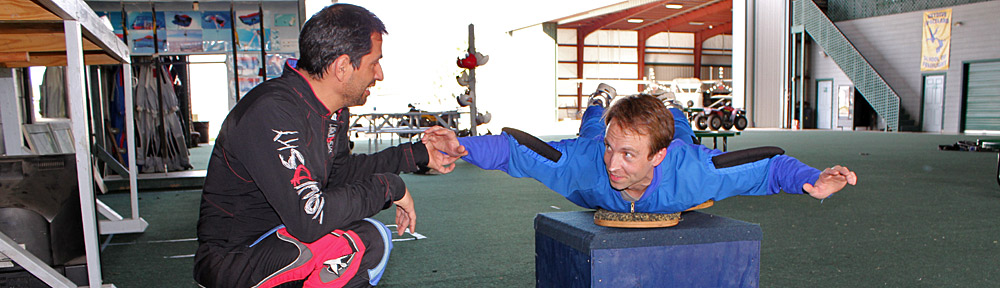
When I was still in school, I was a serious last-minute crammer before tests. Study ahead of time? Not my strong suit. So there I would be at 1 a.m. before a big exam, studying my tail off. 5 minutes before the test, still reviewing. At least I studied, right?! When you are learning to skydive, studying has a huge payoff as well, whether you’re reviewing things at the last…
-
Movement Dive Policies
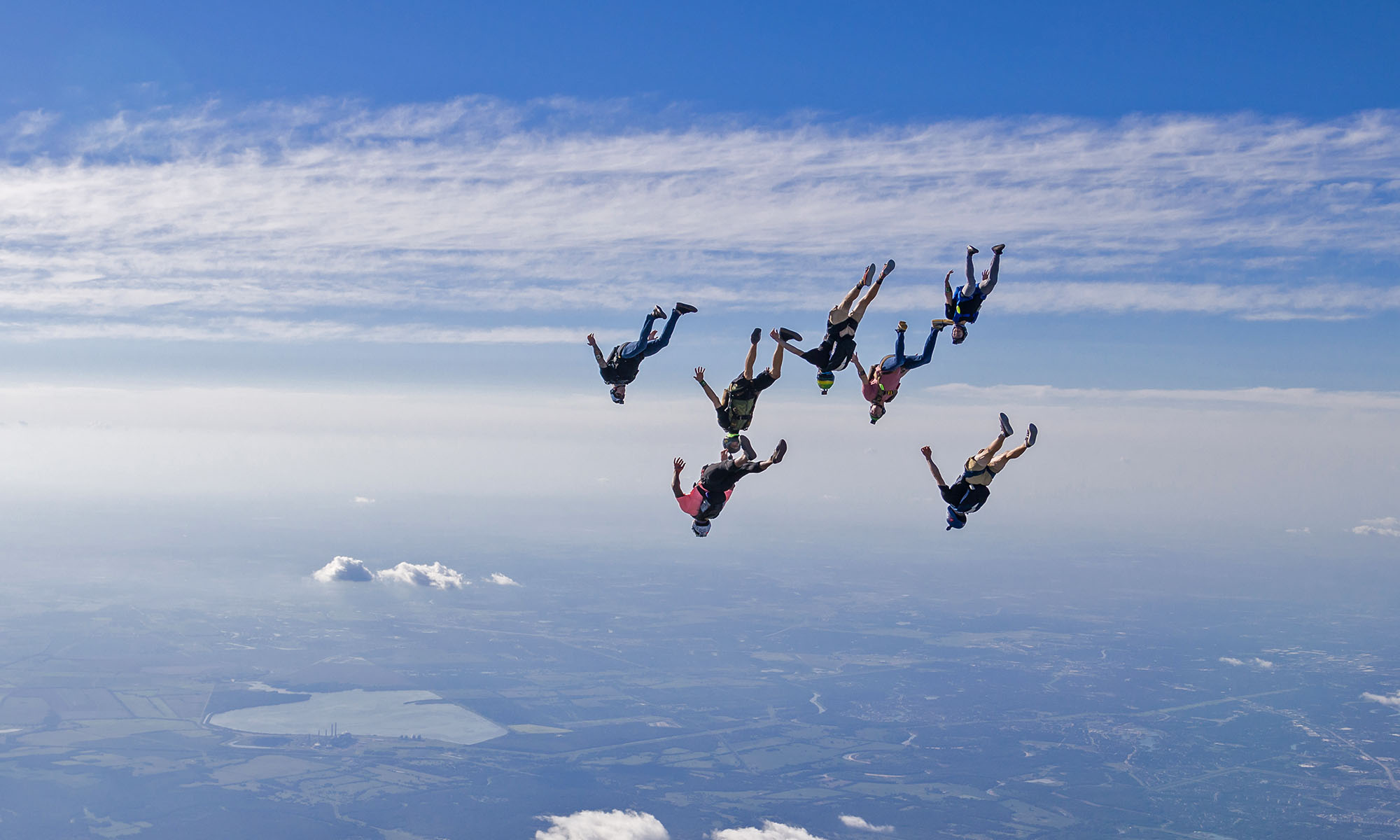
Horizontal movement jumps are fun… free flowing… and inherently potentially much riskier than jumps that fall straight down. Any jump in which jumpers plan horizontal movement other than tracking for separation after breakoff requires good planning and execution to minimize the additional risks to everyone on the load. Above photo by Daniel Angulo! That responsibility is 100% the job of the organizer(s) doing movement jumps, and it should not be…
-
Skydive Spaceland Transitions Events for Recent Grads
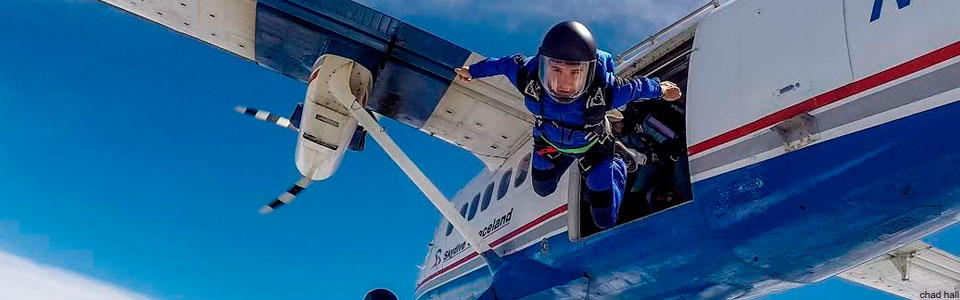
For recent skydiving graduates, there is often a no-man’s-land between the A license and getting on good dives. Skydive Spaceland-Houston has been turning that no-man’s land into free coaching central with its monthly Transitions events. On or near the first weekend of each month, organizers and coaches collaborate to provide free small-group coaching tailored to a particular skill, such as dive and dock, linked exits, and tracking. Future events will…
-
Propeller Safety
There are a lot of things in life we sugarcoat, such as when answering questions like, “How do I look in this dress?” Or “How does this resume sound?” But some things in life just don’t take sugar well–they are what they are. So it is with safety around propellers, be they of the aviation, marine, or any other variety. We get pretty comfortable moving around airplanes in the skydiving…
-
Whose Airspace Is It, Anyway?
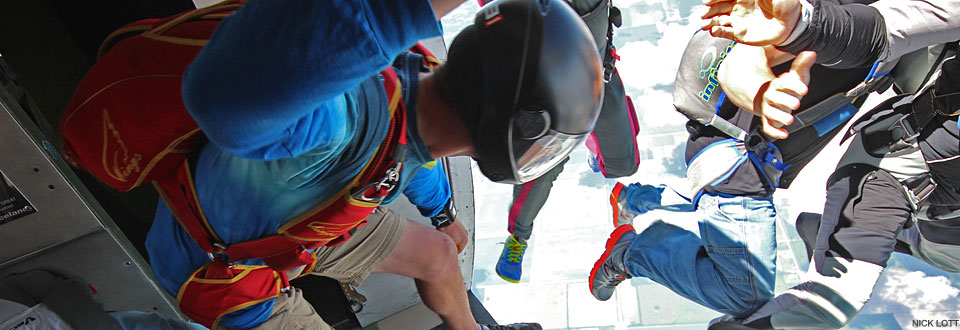
Skydiving often seems like one of the most dynamic, chaotic sports in existence. People are falling from the sky every which way, for cryin’ out loud! 🙂 In reality, the chaos is highly engineered to allow us all to enjoy our dynamic freefallin’ fun while staying safe, and that engineering starts with ensuring that each group on each load has its own airspace column (with the exception of horizontal flying…
-
Exit Separation Between Skydiving Groups
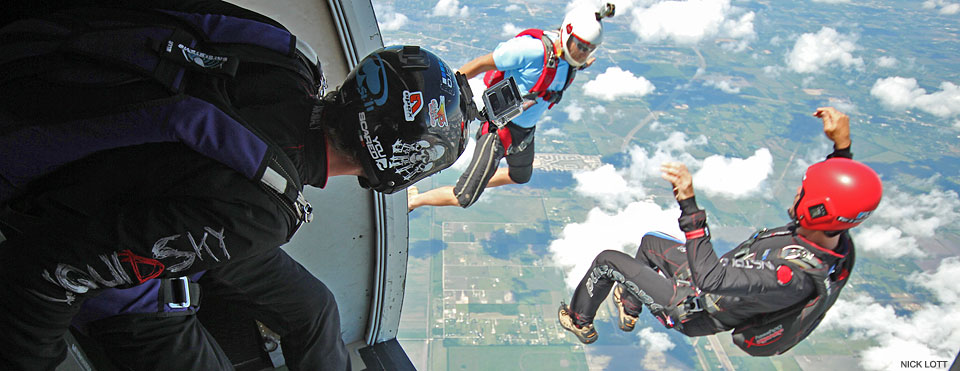
As skydivers, we tend to like to do things together. We like to skydive with our friends, give each other grief about any minor mistakes during the dive, celebrate our successes, and enjoy brews together after sunset. Some people prefer solo skydives on occasion so they can work on skills or just enjoy the sky without distractions. However, there are such things as too much and too little togetherness in skydiving.…
-
Landing Areas: Divide and Conquer
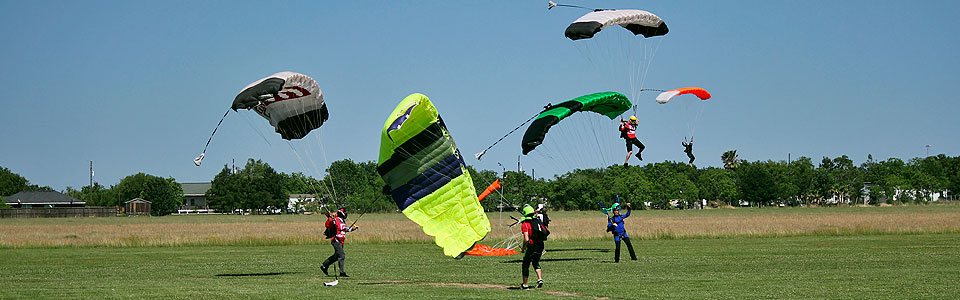
Please note: This article was updated on October 1, 2015. You know how the first time you came to a busy drop zone, it seemed like all the parachutes were flying randomly around the sky? But now that we are skydivers and understand flight plans, we see some degree, at least, of order in the chaos. We’d like to further increase the amount of order in our canopy flight traffic…
-
Skydive Spaceland Introduces the Safety Stand
What if every drop zone posted their safety policies and daily notes conveniently in one location in the loading area for all jumpers, old and new, to browse and learn while waiting for aircraft? Check that box for Skydive Spaceland! We’ve just posted our own Safety Stand in the hangar, complete with information on: Basic safety guidelines Aircraft safety Camera jumps Tracking dives and who should/should not lead them Wingsuit…
-
Do it Right: Visualize Your Skydive
If you’ve ever played sports, chances are good that you’ve heard a coach tell you or someone on your team to visualize doing it right when they were struggling with something. Some call this practice mental rehearsal, and it’s a completely valid strategy to increase performance, because you’re training your brain to perform to the standards of that visualization. Visualization can help you respond more quickly when faced with emergency…
-
Skydiver Training Tip: When to Learn to Pack Your Parachute
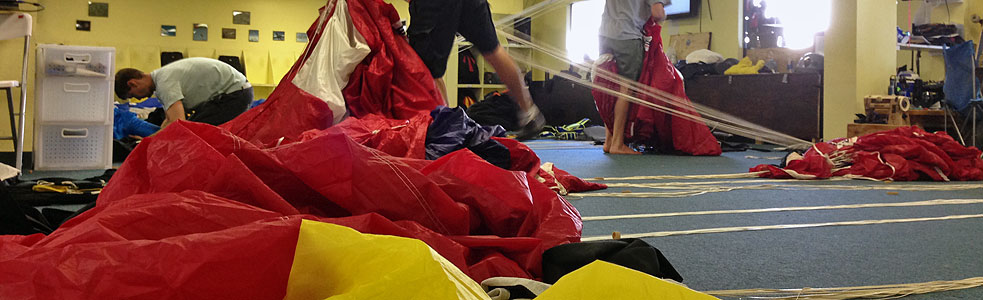
Hello student skydiver! As you progress to ever more awe-inspiring feats of skydiving skill in our Skydiver Training Program, do you ever wonder about the magic that happens before you strap your gear on for the next jump? I refer of course to the magic whereby the billowing parachute, hundreds of square feet of nylon, that you lay down on the packing room floor after a jump is organized and…
-
You’re the Pilot: Take Control!
Ask any group of non-skydivers what they think would be the scariest part of skydiving, and at least a few will answer, “The landing.” Ask a group of skydiving students, or even experienced jumpers, and you’ll get the same answer from a few of them. We have the guts to throw ourselves out of airplanes in flight, yet we’re sometimes scared of piloting the assembly of nylon and string that saves…
-
Skydiving Tip: You’re Not THAT Good…
Skydivers tend to be pretty confident people. We trust ourselves to save our own lives while throwing ourselves out of (ha) perfectly good airplanes towards the planet, right? We trust that we have the skills to succeed in the dives we plan. We trust that our gear will work, and even if it doesn’t, we trust that we have the knowledge and skills to handle it and still land safely.…
-
Tracking Dives: The Fun and the Danger
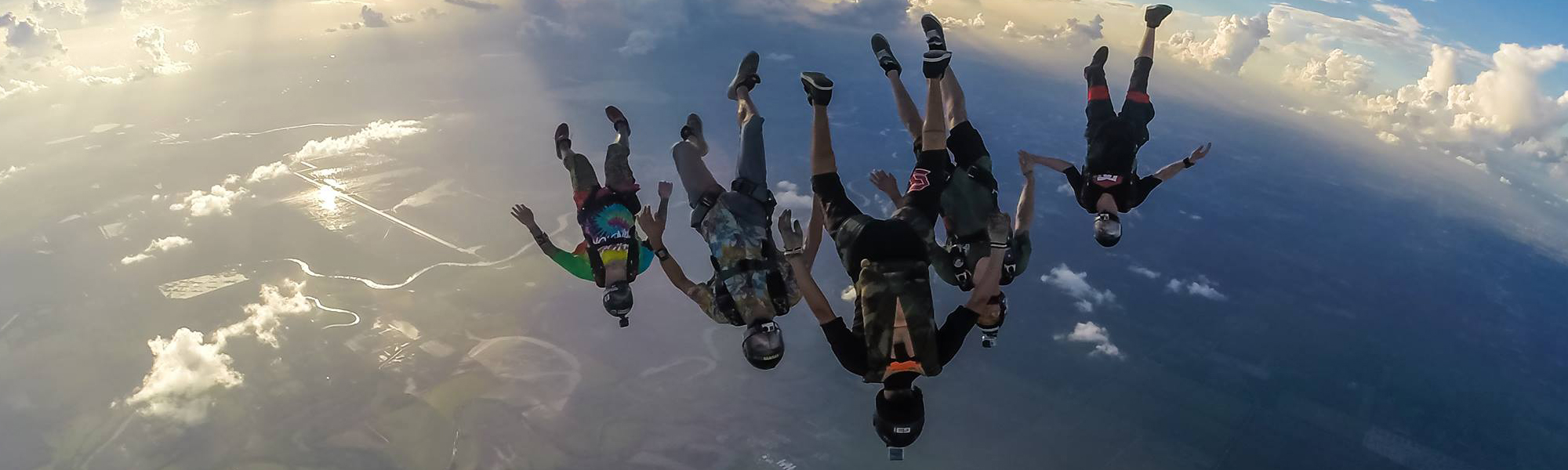
Ah, the sunset tracking dive. What could be more fun than flying along with your skydiving friends in a flock with a beautiful sunset? After all, all the cool kids are doing it! Graduation jump tracking dive, anyone? Just kidding!!!! If the dive goes wrong, a whole lot of things could be more fun than that tracking dive. Tracking and angle flying dives that plan for the group to move…
-
Skydiving Tip: Predictability = Safety
Plan the dive, dive the plan. You’ve been practicing this since your first student training jump. There are two reasons for a dive plan: SAFETY! Engineering the dive so you can get in maximum learning and/or performance from the jump. Once you have graduated from a skydiving training program, there are SO MANY things you can do! You rock–you are now a licensed skydiver! But that is just a license…
-
Parachute Dirt Diving
We dirt dive the freefall portion of nearly all of our skydives, but do you dirt dive your landings? Do you check the wind speed and direction at all altitudes, which way the wind will shift as you descend, etc.? If the wind direction changes, how will that change your landing pattern? As we develop more experience this becomes almost automatic, but initially we have to think about all of…
-
Helmets: Secured for Takeoff
We don’t have a lot of bad words in skydiving (regardless of what you might hear after the beer light comes on! ;), but there is one we can all agree on: Complacency. com·pla·cen·cy n. — A feeling of contentment or self-satisfaction, especially when coupled with an unawareness of danger, trouble, or controversy. In skydiving, we say someone is complacent when they think they are safe but they are acting unsafely or in…
-
Skydiving Advice: Listen With Care
Skydivers come in all shapes and sizes and from all walks of life, but If one word could be used to describe nearly all of us it would probably be “passionate.” This is a sport we love dearly and deeply, and we love to share that passion with others. That passion, unfortunately, can cause problems in the scenario of one jumper giving another advice. If you are a skydiving student…
-
Landing Patterns and Winds
One of the best things about skydiving today compared to some decades past is that we jump steerable parachutes. We have the ability to change our flight paths and land on target, which makes it a lot easier for us to land near the hangar and make lots of jumps in a day without quite the cardio workout of walking in from far-flung fields. These steerable parachutes also make it…
-
The New Beer Line
Ah, the beer line–that line close to the hangar that causes all skydivers in sight distance to yell “BEER!!!!” with glee if you land on the hangar side of it. Did you know we now have one of these in the student/A-B license landing area at our Houston location in addition to our regular beer line? Let me explain. You might have noticed that we have a reference line mowed/burned…